

Imagine this: you’re hiking the ridgeline trail on Oahu, the trade winds are howling, and suddenly a tropical downpour hits. Your music keeps playing without a hitch because you chose your gear wisely. However, for many residents and visitors, the struggle is real—constant moisture, humidity, and salt air turn ordinary earbuds into expensive paperweights within weeks. You need audio gear that laughs in the face of a tsunami warning. Finding truly durable waterproof earbuds in Hawaii demands more than just checking an IP rating; it requires understanding how tropical environments attack electronics. In this guide, we cut through the marketing noise to isolate the specific features that survive Hawaiian life, ensuring your soundtrack never stops, whether you’re in the water at Sandy Beach or trekking through the rainforest.
What Does “Waterproof” Actually Mean for Hawaii’s Conditions?
Water resistance isn’t a one-size-fits-all metric. In Hawaii, you face a unique triple threat: heavy rain, high humidity, and saltwater spray. Understanding the IP (Ingress Protection) rating system is the first step toward making a smart purchase that lasts longer than a tourist’s tan.
Decoding IP Ratings: The Bare Minimum You Need
The IP rating (e.g., IPX7) tells you how well a device handles solids and liquids. The first number is dust resistance; the second is moisture. The “X” usually means dust isn’t tested. For Hawaii, the minimum you should target is IPX7, which means the earbuds can survive immersion in up to 1 meter of water for 30 minutes. However, this rating is often based on fresh water, not the corrosive ocean water found in the islands.
Why Salt Water is the Ultimate Earbud Killer
Saltwater is the nemesis of any electronic device. Unlike fresh water, salt water leaves behind a corrosive residue that breaks down the metal contacts and wire mesh used on speakers and microphones. Even if your “IPX8” earbuds survive a plunge into the Pacific, the drying process can leave behind salt crystals that damage the drivers over time. You need a physical barrier—like a nano-coating or specialized mesh—that protects against salt, not just water pressure.
The Humidity Factor: The Silent Destroyer
Hawaii’s 60-90% humidity levels mean there is moisture in the air almost constantly. Even if you never swim with your earbuds, the air itself is attacking the internals. Look for earbuds with “nano-hydrophobic” coatings. These invisible layers repel water vapor, preventing condensation from building up inside the casing, which is the leading cause of sudden muffled audio in tropical climates.
Why Are My Earbuds Dying So Fast in the Tropics?
If you’re going through earbuds every few months, it’s likely not a manufacturing defect—it’s an environmental mismatch. The combination of sweat (which is salty), sunscreen (which is oily), and rainwater creates a corrosive cocktail that standard earbuds simply cannot withstand.
The “Sweat vs. Water” Misconception
Many brands advertise “sweatproof” earbuds, but sweat is actually more corrosive than fresh water due to the salts and electrolytes. During a hike up Diamond Head, your ears produce significant moisture. You need earbuds specifically rated for “high-intensity workouts” that seal the internal components against ionic corrosion, not just casual splashes.
UV Damage and Material Deterioration
The Hawaiian sun is intense. Constant UV exposure degrades the rubber and silicone tips on earbuds, causing them to crack and lose their seal. When the seal breaks, water enters the charging ports or the driver housing. Look for earbuds made with “UV-stabilized” polymers or higher-grade silicone that can withstand the strong sun without becoming brittle or sticky.
How Do I Choose Earbuds That Survive the Ocean?
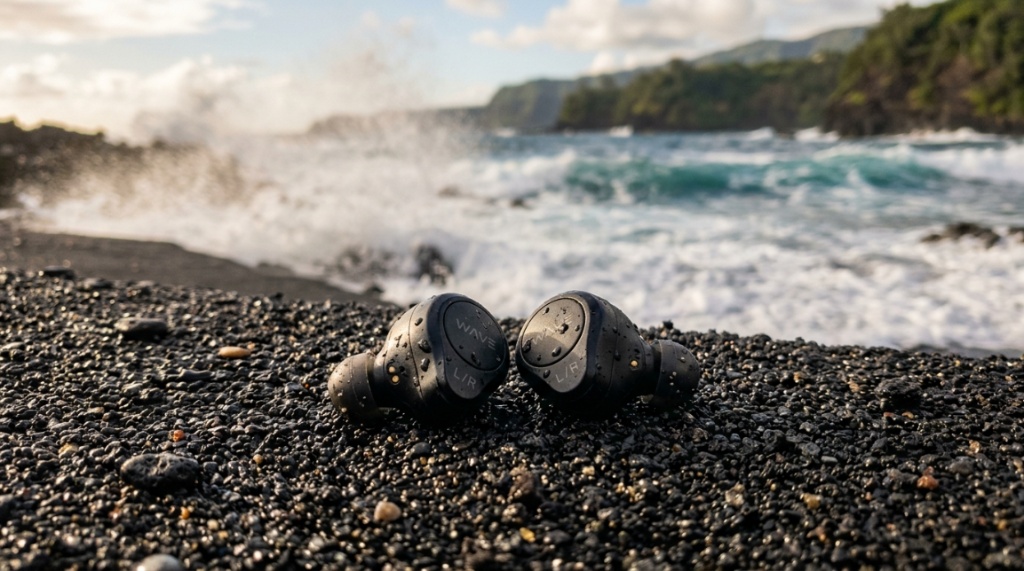
For those who actually go into the water—whether surfing, paddleboarding, or snorkeling—the selection criteria shift. You need a seal that blocks water completely, not just the mesh covering. The housing must be solid with no open ports exposed to the elements.
If you are looking for an option that won’t break the bank while still offering great playback time for your island adventures, check out these affordable wireless earbuds with long battery life.
Understanding Waterproof Nanotechnology
Top-tier manufacturers apply a Parylene coating to the internal circuit boards. This polymer film protects the electronics from moisture and salt damage at a microscopic level. If a brand doesn’t mention this type of “conformal coating,” the earbuds are likely only protected by glue and rubber gaskets, which degrade quickly in the ocean.
Look for “Marine-Grade” Acoustics
Some specific models are designed with “marine-grade” acoustic meshes that prevent water from creating a film over the driver. This film acts like a drumhead, muffling sound. Earbuds designed for water sports often have “pressure-relief vents” that use a hydrophobic membrane to let air escape while blocking water, preserving the bass response even when submerged.
Which Earbuds Offer the Best Battery Life for Long Island Days?
When you’re out all day on a boat or hiking the Kalalau Trail (with a permit), charging access is limited. Battery life becomes a critical feature. You don’t want “sealed” earbuds that die after three hours because they also happen to be the only thing keeping you sane during a long journey.
Balancing “Smart” Features vs. Battery Drain
Active Noise Cancellation (ANC) and “transparency modes” are great, but they drain battery rapidly. In Hawaii, you often want to hear the ocean or be aware of your surroundings for safety. Opt for a pair where you can disable ANC to extend the battery life to 8-10 hours on a single charge, rather than being stuck with 4 hours of “smart” features that constantly fight against the wind noise.
The Charging Case: Your Dry Haven
Your earbuds’ charging case is just as important as the buds themselves. A standard plastic case will allow moisture to seep in when you put wet earbuds back inside, creating a swamp that ruins your battery. Ensure the case has an IPX4 rating at minimum, and ideally, a “drying mode” that uses airflow to remove moisture from the buds before charging.
Is Active Noise Cancellation (ANC) Necessary in Hawaii?
It depends on where you are. If you are in Waikiki dealing with traffic, city noise, and crowded sidewalks, ANC is a lifesaver. However, if you are trail running or surfing, ANC is not only unnecessary but potentially dangerous, as it blocks the ambient sounds you need to stay alert. You need “adaptive” ANC that can be tuned down quickly.
Wind Noise Reduction: A Tropical Priority
The trade winds in Hawaii are strong, especially on the windward side of the islands. A microphone designed for calls will pick up wind and make you sound like you’re inside a jet engine. Look for earbuds with “wind-proof mesh” technology that uses a specific geometric pattern to reduce turbulence, ensuring your voice is clear on calls even when the trades are blowing at 20 mph.
Transparency Mode for Safety
If you are running on a busy road like Kalanianaole Highway, you need to hear cars. A good “transparency” or “hear-through” mode should sound natural, not tinny. The best models use the microphone to amplify external sounds without adding the roaring hiss of the wind, which is a common flaw in cheaper models.
How Should I Care for My Earbuds After a Beach Session?
Even the best durable waterproof earbuds Hawaii residents rely on need proper post-use care to last for years. You cannot just throw them in your bag after a swim. The drying process is critical to preventing galvanic corrosion, which occurs when two different metals touch in the presence of an electrolyte (saltwater).
The Fresh Water Rinse Ritual
After any contact with saltwater, rinse your earbuds thoroughly with fresh water. Do not use soap, as it can break down the hydrophobic coating. Simply hold them under a gentle stream of tap water for about 10 seconds, then shake off the excess water. This removes the salt crystals that are actively trying to eat through your device’s casing.
Drying Techniques to Extend Lifespan
Never use a hairdryer or place them in a microwave to dry them. Instead, place them in a well-ventilated area with a fan blowing on them. Some premium cases have a “UV sanitizer” and “air-dry” feature that circulates air to remove moisture. If your case doesn’t have this, remove the earbuds and let them air-dry completely before placing them in the case to charge.
Can I Use Waterproof Earbuds for Snorkeling and Diving?
Snorkeling is a different beast than swimming laps. It involves constant head movement and water pressure changes. While you might be able to “listen” to music underwater, the Bluetooth signal doesn’t transmit well through water (water absorbs radio waves). Your phone would need to be on the surface, which defeats the purpose for many.
Storage Options: Watch vs. Phone Connectivity
If you want music for snorkeling, you’ll need earbuds that store music internally (MP3 player built-in), not just Bluetooth. This allows you to leave your phone on the boat or beach. Look for models that offer “headless” operation, meaning they can play music without a phone connection, solely relying on internal memory.
What Is the Best Type of Ear Tip for Tropical Heat?
The ear tip material determines both comfort and the waterproof seal. In hot weather, your ear canal sweats, and standard silicone tips can slide out easily. Choosing the wrong tip can break the seal, allowing water to enter even if the earbud is technically “waterproof.”
Silicone vs. Foam: The Moisture Trap
Foam tips (like Comply) are excellent for noise isolation, but they are terrible for water sports. They absorb water like a sponge and take hours to dry, often becoming a breeding ground for bacteria. In contrast, hybrid silicone tips with a “wing-tip” design hold the bud in place and repel water easily, drying almost instantly. These are the best choice for Hawaiian conditions.
Finding the Perfect “Tropic” Fit
If the earbuds don’t fit snugly enough to create an airtight seal worth of water entry, you cannot rely on them even if they are IPX8 rated. You need a “3-point fit” system where the tip, the wing, and the body of the earbud all work together to form a barrier. This prevents water from entering the acoustic tube that leads to the speaker driver.
Are Expensive Earbuds Worth It for the Water?
Price is not always an indicator of water durability. You are often paying for brand names or specific tuning. However, budget earbuds often cut corners on the internal conformal coating, which is the most expensive part of waterproofing. You need to find the sweet spot where you aren’t overpaying for features you don’t need (like wireless charging) but are paying for genuine seam sealing.
Pros and Cons of Budget vs. Premium Models
Budget models offer decent water resistance but rarely survive the salt test. Premium models (H2) often include better warranties and warranty claims for water damage. When purchasing, check if the warranty explicitly covers “sweat and water damage.” Many manufacturers exclude this, assuming you will drop them in the toilet, not the surf. If a company is confident in their waterproofing, they will cover it.
Here is a quick breakdown of what to expect:
| Feature | Budget (Sub-$50) | Premium ($150+) |
|---|---|---|
| Conformal Coating | Rarely Present | Usually Included |
| Saltwater Warranty | Void | Often Covered |
| Battery Life | 4-6 Hours | 8-10 Hours |
| Wind Noise Handling | Poor | Advanced Mesh |
How Does the Locking Mechanism Affect Durability?
The “lock” is the mechanism that holds the earbud in your ear and seals it. If you are paddleboarding and fall in, the force of the water hitting your ear can dislodge a poorly locked earbud. The physical durability of the charging pins is also a factor; if they corrode, the case won’t charge the buds.
Charging Pins: The Most Vulnerable Spot
Look at the gold contact points on the earbud and the case. If they are exposed, they will corrode quickly in a humid environment. Magnetic charging connectors are ideal because they snap into place and create a tighter physical fit. Ensure the charging pins are “gold-plated” to offer oxidation resistance, significantly extending the life of the battery contact.
When Is the Best Time to Buy Waterproof Earbuds?
Timing your purchase can save you 20-30% off the retail price, allowing you to buy a higher-tier waterproof model without the premium cost. Typically, the best sales align with major holidays, but in Hawaii, the local “change of season” sales in late spring also see a drop in audio gear prices as we approach summer water sports season.
Evaluating “Waterproof” Claims in Reviews
Always cross-reference user reviews with the “water” context. Look for reviews that mention “ocean,” “surf,” or “beach.” A user in Arizona claiming the earbuds are waterproof likely only tested them in a pool. Feedback from users in humidity-heavy states like Florida or Hawaii is worth ten times more than a standard reviewer.
Why Is the Warranty the Ultimate Test of Durability?
The warranty is the manufacturer’s contract with you that says they believe their product can survive real-world use. If a company only offers a 90-day warranty, they know the earbuds will likely die in 120 days. Look for a minimum 1-year warranty, but more importantly, read the fine print regarding the “environment.”
Selecting for the “Aloha” Standard
To truly survive Hawaii, you need a product that is built with an “Aloha” standard: durable enough to handle the outdoors but comfortable enough for daily wear. Selecting gear with triple-layer sealing and user-replaceable ear tips is crucial because no matter how good the waterproofing is, the silicone will eventually wear out. Buying a product with available spare parts is the ultimate sign of durability.
Frequently Asked Questions
Can I wear waterproof earbuds in the ocean?
Yes, but only if they are rated IPX8 and have a specific saltwater corrosion warranty. Standard IPX7 earbuds will survive immersion but may corrode over time due to salt residue. It is essential to rinse them in fresh water immediately after ocean use to prevent long-term damage to the charging ports and mesh.
Why do my earbuds keep cutting out when I sweat?
Sweat can block the microphones or pressure vents, causing the Bluetooth to drop or sound to become fuzzy. Additionally, sweat is conductive and can trigger touch sensors. Opt for earbuds with physical buttons instead of touch controls if you sweat heavily, and ensure the vents are not blocked by earwax or sweat residue.
Is IPX7 good enough for running in the rain?
Yes, IPX7 is more than sufficient for running in the rain. It handles heavy downpours and splashes easily. The main concern is not the rain but the wind. The moisture from rain combined with high winds can affect the microphone call quality, but the audio playback will remain unaffected.
How long do waterproof earbuds last before they break?
With proper care, high-quality waterproof earbuds can last 2-3 years. The battery is the first component to degrade, usually losing capacity after 500 charge cycles. However, the waterproof seal can break down if exposed to extreme heat or UV sunlight constantly, so storage in a cool, dry place is essential.
Can I charge my earbuds if they are wet?
No, you must dry them thoroughly before charging. Charging a wet device can cause electrolysis, damaging the connector pins. Wipe them dry with a soft cloth and let them air-dry for at least an hour. Some cases have a “dry” mode that utilizes the case’s battery to remove moisture before charging.
What is the difference between sweatproof and waterproof?
Sweatproof usually implies a light moisture resistance (IPX4/5) to protect against sprays, while waterproof (IPX7/8) means the device can sustain immersion. For Hawaii, you need waterproof, as high humidity and sudden rain make sweatproof ratings insufficient. Sweatproof is better suited for gyms, not tropical environments.
Conclusion
Picking the right audio gear for the islands isn’t about finding the loudest speaker; it’s about finding a partner that can endure the unique environmental stress that Hawaii throws at your gadgets. You need to prioritize internal corrosion resistance over external water sealing, and you must consider the long-term effects of UV and salt exposure. Remember that the charging pins and the ear tips are your weakest links, and they require your attention after every use. By focusing on the specific features we discussed—salt-rated membranes, conformal coatings, and replaceable parts—you can enjoy your music without the constant anxiety of damaging your investment. Don’t go for the cheapest option; go for the smartest engineered solution that offers a water damage warranty. Now, suit up, hit the beach, and let the waves provide the percussion for your soundtrack.




Leave a Reply