
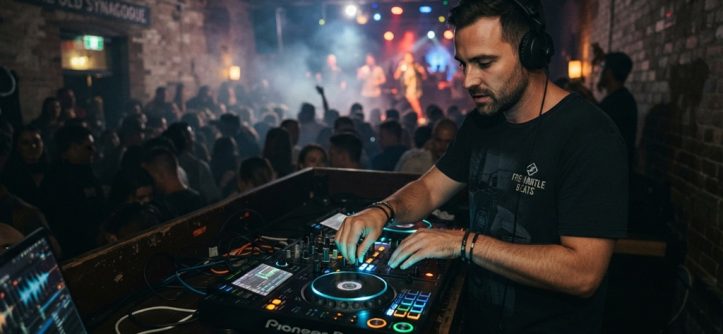
Imagine you are standing in a cramped, bass-heavy club in Seattle, the crowd is waiting, and your cue track suddenly sounds muffled and muddy. You are not just hearing bad audio you are experiencing the results of choosing the wrong gear. Every DJ in Washington, from the rainy sets in Spokane to the high-energy events in Bellevue, faces this same dilemma: finding headphones that deliver isolation, durability, and precise sound without breaking the bank. The search for the best over-ear headphones for DJing is not about picking the most expensive pair; it is about finding a tool that handles the unique climate, club environments, and performance demands of the Pacific Northwest. This guide is your roadmap to making a choice that eliminates guesswork and enhances your mixing precision.
This guide is tailored for Washington State DJs, addressing local gig conditions, gear durability against Pacific Northwest weather, and specific features that matter for both mobile and club DJs.
What Makes a Headphone “DJ-Grade” in 2026?
A DJ-grade headphone is engineered for high-fidelity monitoring in loud environments, not just consumer listening. In 2026, the bar has been raised with features like hybrid active noise cancellation (ANC), swivel-ear cups for one-ear monitoring, and detachable cables with locking mechanisms. The core pillars remain: sound isolation, build durability, and the ability to handle high SPL (sound pressure level) without distortion. Unlike studio headphones that aim for flat response, DJ headphones are designed to be “fun” and energetic, often with a slight V-shaped frequency response to help you feel the beat.
Key Differences Between Studio and DJ Headphones
Studio headphones are analytical tools for mixing they reveal flaws and are ruthlessly accurate. DJ headphones, however, are performance instruments. They prioritize loudness, isolation, and physical flexibility. A studio pair might have a coiled cable that tangles easily, while a DJ pair features a robust, replaceable cable with a strain relief designed to survive road cases and heavy hands. Furthermore, DJ headphones often sport a wider frequency range emphasis (50Hz–20kHz) that makes them more sensitive to phase and timing, which is crucial for beatmatching.
The 2026 “Wa” Factor: Climate and Portability
Washington State’s damp, variable climate means your gear faces moisture, temperature swings, and sudden commutes. In 2026, look for headphones with hydrophobic nano-coating on the ear pads or at least IPX4 water resistance on the outer housing. Portability is also vital for the “WA” DJ who travels between gigs in Seattle and Tacoma. Features like foldable yokes and a hard-shell carrying case are non-negotiable. The build must withstand the 40-degree morning chill and the 85-degree stuffy club back room.
Why Do Over-Ear Headphones Dominate Professional DJ Booths?
Over-ear headphones are the industry standard because they offer superior passive noise isolation (PNI) compared to on-ear or in-ear monitors. The full ear cup creates a seal that blocks ambient noise, allowing you to hear the beat and your cue mix clearly even in a crowded room. Additionally, over-ear designs accommodate larger, more powerful drivers (typically 40-50mm), which produce deeper bass response and higher maximum volume without distortion two critical elements for beatmatching bass-heavy house, techno, and hip-hop tracks common in WA clubs.
Comfort and the Long-Set Factor
In the WA gig circuit, sets can last 4-6 hours, especially at weekend residencies. Over-ear headphones distribute weight across the entire headband and ear pads, reducing fatigue. Lightweight designs under 300 grams are preferred for staying alert during long transitions. Memory foam earpads with protein leather or breathable mesh are essential to prevent sweating during high-energy peak-hour sets, a common issue in the humid atmosphere of packed venues.
Swivel vs. Standard Yokes
The swivel mechanism is more than a gimmick it is a workflow tool. Single-sided swiveling (one cup rotating 90°) is popular for one-ear monitoring, letting you keep one ear uncovered to hear the main mix. Double-sided swivel (both cups rotating) is excellent for both turntablists and digital DJs who need to quickly switch ears. In 2026, look for a swivel that locks firmly in place to avoid accidental rotation mid-mix. This is a feature that separates a $100 pair from a $300 pair.
How Do You Choose Between Wired and Wireless Options?
As of 2026, professional DJs overwhelmingly prefer wired for reliability, but wireless has become a viable backup. Wired connections guarantee zero latency, which is non-negotiable for beatmatching. Wireless standard (Bluetooth 5.4) has reduced latency to under 40ms, which is acceptable for home practice but risky for live use. The best approach is to buy a hybrid set: a wire that sounds pristine, plus flagship wireless capability for listening to sets back home or preparing in a coffee shop in Portland (if you ever cross the border).
The Latency Conundrum
For digital DJs using Serato or rekordbox, latency causes a phasing effect when the cue and main outputs are in sync. This will throw off your timing and ruin a mix. In 2026, even the best Bluetooth still introduces enough delay to feel “sloppy.” Therefore, if you see a cheap wireless-only DJ headphone option, run away. Always have a wired 3.5mm or 6.35mm connection as your primary source.
Battery Backup vs. No Batteries
Active noise cancellation (ANC) requires batteries. Some DJs deliberately avoid ANC because it adds weight and a point of failure. However, modern ANC headphones (like the Sony MDR-1AM2 over-ears or the Sennheiser HD 630VB) offer an “ambient mode” that is useful for monitoring the crowd without removing the headphones. If you choose a wireless model, check the battery life for wired mode (many still work as passive analog headphones with no battery, but at lower volume).
Which Sound Profile Is Best for Beatmatching?
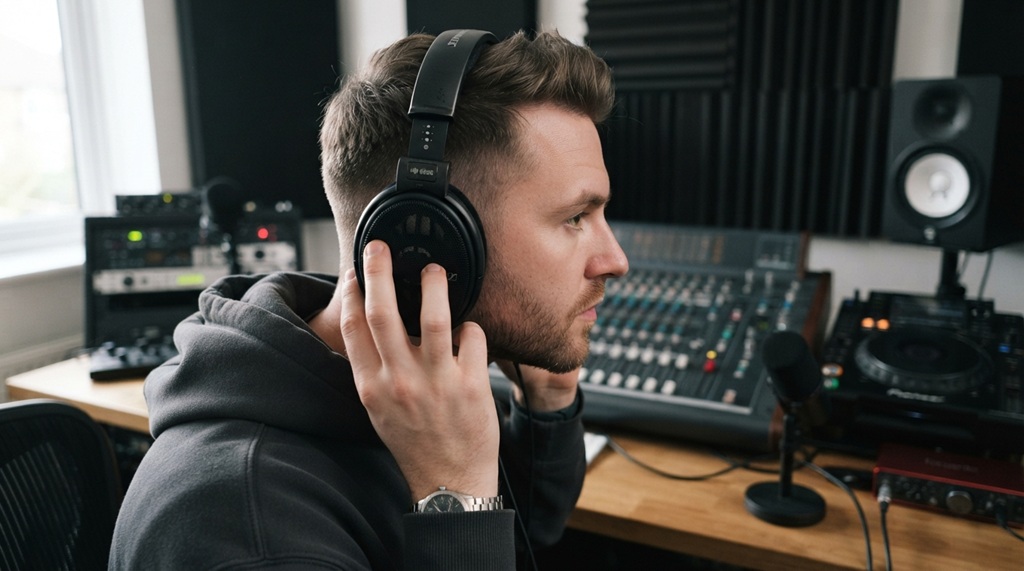
The ideal DJ monitor has a flat frequency response from 20Hz to 20kHz with a slight bump around 2-5kHz for clarity in the high-end, and a defined low-end. However, most club systems are so bass-heavy that you need headphones that can isolate the kick drum and hi-hats, not just rumble. The best profile for beatmatching is one that is “defined” rather than “colored” you want to hear the transients (the attack of the kick) with crystal clarity. A neutral response is the safest bet for ensuring your mixes translate well to the house PA system.
Impedance and Headphone Amplification
Most DJ mixers (Pioneer DJ’s DJM series, Allen & Heath) have built-in headphone amplifiers that work best with low-impedance headphones (rated at 25-70 ohms). Higher impedance (250+ ohms, like studio headphones) will sound quiet and lack punch on a mixer’s standard output. Look for a nominal impedance between 32 and 55 ohms to ensure you’re getting adequate volume headroom. High sensitivity (rated in dB/mW) is more important than raw power here; aim for over 100 dB/mW.
Bass Response: Not Too Much, Not Too Little
Overemphasized bass is a common trap for “DJ-marketed” consumer headphones. While you need to feel the beat, an overwhelming boom masks the hi-hats and snares essential for phrasing. Good DJ headphones have a bass shelf that accentuates the low end without bleeding into the mids. Test your headphones with a track you know extremely well if the bass overpowers the vocals on your reference, it is not suitable for DJing.
Testing Build Quality for Road Life
Your headphones face severe abuse on tour thrown into flight cases, wedged under heavy gear, and constantly dropped on stage. Evaluating durability requires looking beyond cheap plastics to components built for the road: an adjustable steel or aluminum headband, self-repairing synthetic leather ear pads, and a Kevlar-reinforced cable. Focus on high-stress failure points like the hinges and the 3.5mm jack, where a 45-degree angled connector provides crucial strain relief against sudden yanks. Proper clamping force is equally vital it must hold the earcups securely during dynamic movements without inducing severe headaches over long sets. A truly tour-ready headset should withstand a direct drop onto concrete without loss of audio performance, guaranteeing reliable sound isolation before you transition to specialized gear like learning avoid common sleep headphone buying mistakes for recovery between shows.
Dimensions and Weight Flexibility
WA DJs often have to travel on public transit or walk several blocks with gear. The weight of the headphones (including the cable) matters. A heavyweight pair (400 grams) will cause fatigue. The new 2026 models are trending lighter, with some flagship models under 270 grams, offering a perfect balance. Also consider the ear pad size they must fit comfortably around your ears without pressing against the cartilage, especially if you wear glasses (and in WA, you usually do!).
Field-Testing: The “Headphone Drop” Test
Before buying, physically test the build. Pick the headphone up by the ear cup and let it hang. Does the headband twist out of shape? Does the slider loosen? Try the rotation does it have a positive stop? A cheaply built headphone will flop around. A pro headphone holds its position. Visit a local WA audio store (like DJ Supply in Seattle) and try the weight and mechanism slowly.
What Are the Best Over-Ear DJ Headphones Under $300?
For under $300, you are looking at the sweet spot for quality. The top contenders in 2026 are the Audio-Technica ATH-M50xBT2 (hybrid) and the Pioneer DJ HDJ-CUE1. However, the absolute best in this range for pure DJing is the AIAIAI TMA-2 DJ Preset, which is modular and customizable. It uses a bio-cellulose driver for a tight, accurate bass response and excellent isolation. The TMA-2 offers replaceable parts (cable, earpads, headband), meaning you won’t have to buy a new pair if the cable goes bad a massive plus for longevity.
Comparison Table for 2026 Budget Picks
| Model | Driver | Weight | Key Feature |
|---|---|---|---|
| Audio-Technica ATH-M50xBT2 | 45mm | 307g | Hybrid wireless + wired, signature clarity |
| Pioneer DJ HDJ-CUE1 | 40mm | 250g | Lightweight and flexible, bright midrange |
| AIAIAI TMA-2 DJ Preset | 40mm Bio-Cellulose | 285g | Modular design, excellent isolation |
| Shure SRH750DJ | 50mm | 315g | High SPL handling, collapsible |
All of these are under $300 and provide a professional-grade experience. Focus on the AIAIAI for modularity if you are hard on gear, and the M50xBT2 if you need the wireless flexibility for practice.
Which Premium Over-Ear Headphones Are Worth the Investment?
If you have a budget over $400, you are looking at the high-end tools used by touring professionals. The Pioneer DJ HDJ-X10 is a step above it’s build like a tank with a 3.5mm lock-in system and offers 5 Hz to 40 kHz response, making it future-proof for hi-res audio. The V-Moda Crossfade M-100 Master is also exceptional its 50mm drivers deliver a visceral bass response without sacrificing accuracy, and its steel frame is virtually indestructible. These models think about road durability first, audio purity second.
The Flexibility of High-End Wireless Models
The premium segment sees better integration of Bluetooth with LDAC codec for high-res wireless streaming, but for DJing, the wired connection is still king. The reason these are “worth it” is the damping system. The high-end headphones have a dampened driver mechanism that reduces mechanical vibration, so you get a cleaner signal at high volumes. The HDJ-X10 has a special coating that resists sweat useful for the energetic sets at the Showbox in Seattle.
Do You Actually Need a Second Pair?
Even with a premium pair, many pros keep a budget pair as backup. The cost is justified if you are a working DJ where a single failure means no gig. In 2026, the trend is to have a durable wired pair for gigs and a lightweight, wireless pair for travel and preparation. The premium investment is about having a primary pair that will last several years. If you can afford it, do not skimp on the primary tool.
How Do You Maintain Headphones for Washington Weather?
The Pacific Northwest is damp. In 2026, most ear pads are made of leatherette or polyurethane that can degrade with moisture. To protect your investment, invest in a dehumidifier pack for your headphone case. After every gig, wipe down the ear pads with a microfiber cloth and allow them to air out away from direct sunlight. Clean your pads monthly with isopropyl alcohol (at least 70%) to remove oils from your skin, which can break down the material. Also, keep the connectors free of moisture to prevent corrosion.
The Right Way to Wrap Your Cable
Improper cable wrapping is the silent killer of headphones. Always use the over-under method (alternating the wrapping direction) to prevent kinks and short circuits. With DJ headphones, the detachable cable is a blessing you can replace it without soldering. Make sure to detach the cable before storing the headphones to avoid stressing the 3.5mm jack. In WA, where you might be packing up while it’s raining, grabbing the cable roughly is a common cause of failure.
Replacement Parts: The 2026 Standard
In 2026, the best headphone brands have committed to eco-friendly repairability. When buying, check if the ear pads, cable, and headband foam are sold as spare parts. This is a huge factor for a WA DJ you can extend the lifespan of a $200 pair by replacing $20 ear pads every few years. This aligns with sustainability goals and saves money long-term. This is why the AIAIAI modular system is increasingly popular among eco-conscious WA DJs.
Can You Use a Single Headphone for Both DJing and Production?
Technically yes, but you will be compromising somewhere. DJ headphones often have a boosted bass and a V-shaped response, which is bad for precise mixing and mastering. Production headphones (like open-back models) have a neutral response, but they leak sound and have low isolation terrible for a loud club. For quality results in both, you would need two pairs. However, if you only do light production for edits and mashups, a good DJ headphone like the Pioneer DJ HDJ-X10 has a relatively flat response for its class and can work in a pinch for production.
Open-Back vs. Closed-Back for DJs
Stick with closed-back for DJing. Open-back designs allow air to pass through the ear cups, creating a wider soundstage. But they provide zero isolation you will hear all other sounds in the room, making beatmatching impossible in a live environment. Closed-back seals the sound in and the noise out. For production, open-back is superior for spatial reasoning, but you cannot use them for mixing live. If you are producing, recognize the limitations of your gear; a closed-back is fine for checking bass levels, but you’d need a reference pair for final studio work.
What Is the Best Way to Test Headphones in Washington State?
Never buy DJ headphones without hearing them. The acoustics of a store are very different from a club, but you can still identify the sound signature. In WA, visit a store that has actual DJ gear like a music instrument store with a mixer for you to plug into. Bring a USB stick with familiar tracks (WAV or FLAC files). You are testing for comfort (wear them 20 minutes), isolation (can you listen at 70% volume and not hear the person talking next to you?), and loudness (can you hear the beat clearly over the store’s noise?).
Using a Mixer to Get Realistic Volume
Plug the headphones directly into a DJ mixer’s headphone jack, turn the volume up to 80%, and see if it distorts. If it sounds harsh or flat, move on. The ultimate test is to use the cue/master blend knob. Isolaate the cue, then bring the master in. You should be able to clearly separate the two layers. This mimics the exact scenario you’ll face on stage. If you can’t hear separation, the headphone isn’t for DJing.
How Should You Budget for Your Next Pair?
As a general rule, a working professional DJ who gigs weekly should budget at least $150–$200 for a reliable pair. This is not a mark of snobbery; it is the cost of durability and sound quality. If you are a beginner, you can start with a $70–$100 pair, but be prepared to upgrade within a year. The math is simple: a good headphone lasts 3-5 years if maintained. A cheap pair breaks in 6 months, costing you more in the long run. Allocate about 10% of your annual gear budget to headphones.
The Cost of “Cheap” Headphones
Beware of unbranded or unknown brands offering $30 “DJ headphones.” They claim to have big bass, but they lack the build integrity and also have poor driver matching your right ear might hear a slightly different frequency response than your left. This destroys mixing accuracy. It is always safer to buy used from a reputable brand (like Sennheiser, Sony, or Audio-Technica) than new from a no-name brand. The internal driver quality matters more than external looks.
When you’re ready to narrow your choices, consulting a curated list can save time. For a deeper dive into models that fit the unique needs of Washington DJs, check out this resource on the best over-ear headphones for DJing it’s a solid starting point for side-by-side comparisons and local dealer tips.
Which 2026 Features Are Actually Worth Paying For?
In 2026, the headline features are smart ANC, environmental sound capture, and dynamic EQ. But for pure DJing, most of these are extraneous. The one worth paying for is hybrid ANC that can be toggled off. When you are in a warehouse party with a loud PA, turning on ANC helps you use lower volume, reducing ear fatigue. The feature to avoid paying extra for is “spatial audio” it’s useless for mixing because it changes the stereo image, which is misleading during beatmatching.
Rechargeable vs. Disposable Batteries
Avoid any headphone that still uses AAA batteries. In 2026, all premium wireless models have built-in USB-C rechargeable batteries. A model with 40-hour battery life is standard. But you must also check the “wired mode” functionality. Can you use it as a passive headphone if the battery dies? Many hybrids let you use the 3.5mm cable with no battery. This is a non-negotiable feature for a DJ it is your failsafe.
Detachable Cable Locking System
This is perhaps the most critical feature. A standard 3.5mm jack will pull out if stepped on, cutting your sound. A locking mechanism (like the one on the HDJ-X10 or the AIAIAI) has a screw-down collar or a twist-lock that secures the cable into the ear cup. This will save you from losing the signal in the middle of a set. It is worth the extra $30 for this alone.
Frequently Asked Questions
Are DJ headphones good for everyday listening?
Yes, but they are colored and have a strong bass response. They are not ideal for neutral music enjoyment, but they are exciting for electronic and hip-hop music. Their folded form is also less portable than true travel headphones.
What size driver is best for DJing?
40mm to 50mm drivers are standard. Larger 50mm drivers handle higher volume without distortion, but 40mm models are often lighter. It’s about balance, not raw size. A well-tuned 40mm beats a sloppy 50mm.
Can I use noise-cancelling headphones for DJing?
Yes, but with caution. ANC reduces low-frequency hum, which can help you hear the mid and high frequencies better. Just ensure the headphone still works in wired mode without power, and that the ANC doesn’t introduce a “hiss” you don’t want during a quiet breakdown.
Does the band of the headphone matter?
Absolutely. A metal band is more durable than plastic, but it adds weight. Some models use a spring steel band inside a plastic housing. Test for flex and pressure points, especially around the top of your head. A padded headband that doesn’t pinch is vital.
How often should I replace ear pads?
If you gig weekly, replace ear pads every 6-12 months. The material degrades from sweat and face oils, reducing isolation and comfort. It is the most impactful maintenance step you can take for sound quality.
Is a higher ohm rating better for DJ mixers?
No. DJ mixers have low-voltage amplifiers. They are designed for low-impedance headphones (25-70 ohms). Higher ohm (like 250) will be quiet and require an external headphone amp, which you won’t carry to a gig.
Conclusion
Finding the perfect pair of best over-ear headphones for DJing in Washington is not just about reading specs; it’s about matching the gear to your local reality. Prioritize isolation, durability, and low impedance above flashy features. Remember to test with a mixer, not just your phone, and factor in the weight and closure for those long sets. Whether you choose a rugged modular AIAIAI or an all-arounder like the ATH-M50xBT2, a quality pair is an investment in your performance and your hearing. Do not let a cheap pair ruin your mix or your night. Visit your local store, try them on with your own music, and make the choice that keeps you locked into the beat, from Seattle to Spokane. Your next gig deserves that clarity.




Leave a Reply