
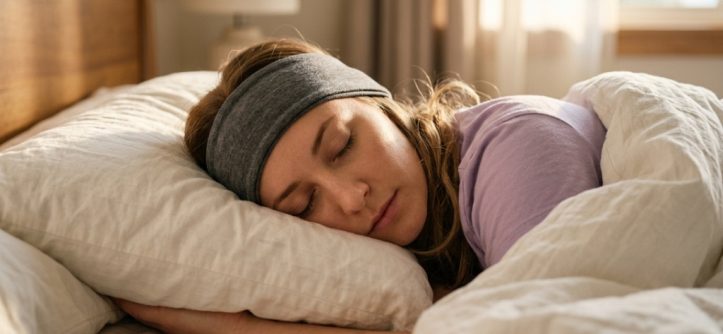
Most sleep headphone buyers make the same purchase, face the same disappointment, and return the same product within two weeks — because they shop for sleep headphones using the criteria that work for daytime headphones but completely fail for overnight wear. Sleep headphones reviews consistently highlight one pattern: the headphones that sound best during the day become instruments of torture when you try to sleep on them for 7 hours. Wireless sleep headphones require evaluation criteria that flip normal headphone priorities upside down: thickness matters more than sound quality, sleeping position compatibility matters more than frequency response, and auto-shutoff matters more than battery life.
Sleep headphones reviews evaluate wireless headphones, headbands, and in-ear devices specifically designed for overnight wear during sleep — assessing comfort during side-sleeping, noise masking effectiveness for falling asleep, audio quality sufficient for sleep content (white noise, meditation, ASMR), and overnight durability through repeated unconscious movement. Wireless sleep headphones must survive the unique demands of 6–8 hours of continuous wear during which the user is unconscious and unable to adjust fit or position.
This guide identifies the specific buying mistakes that cause sleep headphone returns — and gives you the evaluation framework that leads to products you’ll actually wear through the night.
What Are the Most Common Sleep Headphone Buying Mistakes?
The five most common mistakes: buying standard earbuds expecting them to work for side-sleeping (they press painfully into ear canals), choosing based on sound quality rather than sleep-position comfort, ignoring auto-shutoff features (draining battery nightly), selecting headphones without testing side-sleeping compatibility, and buying over-ear headphones that are physically impossible to sleep in.
Mistakes ranked by return frequency:
| Mistake | Why It Happens | The Reality | Better Approach |
|---|---|---|---|
| Using regular earbuds for sleep | Already own them, seem small enough | Hard housings create pressure points during side-sleeping within 20 minutes | Purpose-built sleep earbuds or headband-style sleep headphones |
| Prioritizing sound quality | Daytime headphone shopping habits | Sleep audio (white noise, rain sounds) requires minimal sound quality — comfort is 10x more important | Evaluate comfort first, accept “adequate” audio |
| Ignoring sleeping position | Not thinking about unconscious movement | Side sleepers need flat/flexible designs; back sleepers have more options | Identify your primary sleep position FIRST, then filter products accordingly |
| Buying over-ear for sleep | Comfort association from daytime use | Over-ear headphones make side-sleeping impossible and fall off during back-sleeping | Only headband, flat earbuds, or minimal in-ear designs work for sleep |
| Skipping battery/auto-off features | Not considering unconscious use | Without auto-shutoff, headphones die nightly or play all night wasting battery | Require sleep timer and 8+ hour battery for overnight use |
What Actually Makes a Headphone Suitable for Sleeping?
Three non-negotiable requirements for sleep headphones: a profile thin enough to not create pressure during side-sleeping (under 6mm at the ear contact point), materials soft enough to remain comfortable against a pillow for hours, and secure enough fit to stay positioned through unconscious movement without waking you.
Sleep-specific requirements vs. daytime headphone requirements:
- Thickness/Profile (most critical): Side sleepers press their full head weight onto the ear touching the pillow. ANY hard protrusion becomes painful within minutes. Sleep headphones must be nearly flat (under 6mm) at the ear-to-pillow contact point or flexible enough to compress without creating pressure.
- Material softness: Silicone, foam, and fabric are the only acceptable materials against skin for 6–8 continuous hours. Hard plastics and rigid housings that feel fine for 2-hour daytime sessions become torture devices overnight.
- Overnight battery life: Minimum 8 hours for full-night coverage. Ideally 10+ hours to account for not starting at 100% charge. Some sleepers need only 1–2 hours (to fall asleep) while others play audio all night for noise masking.
- Auto-shutoff/sleep timer: Stops audio after a set time so you don’t drain the battery or have audio playing loudly at 4 AM when sleep stages cycle to lighter sleep.
- Secure overnight fit: Must stay in place through unconscious rolling, pillow adjustment, and arm movement without requiring conscious repositioning that wakes you.
Which Sleep Headphone Categories Actually Work?
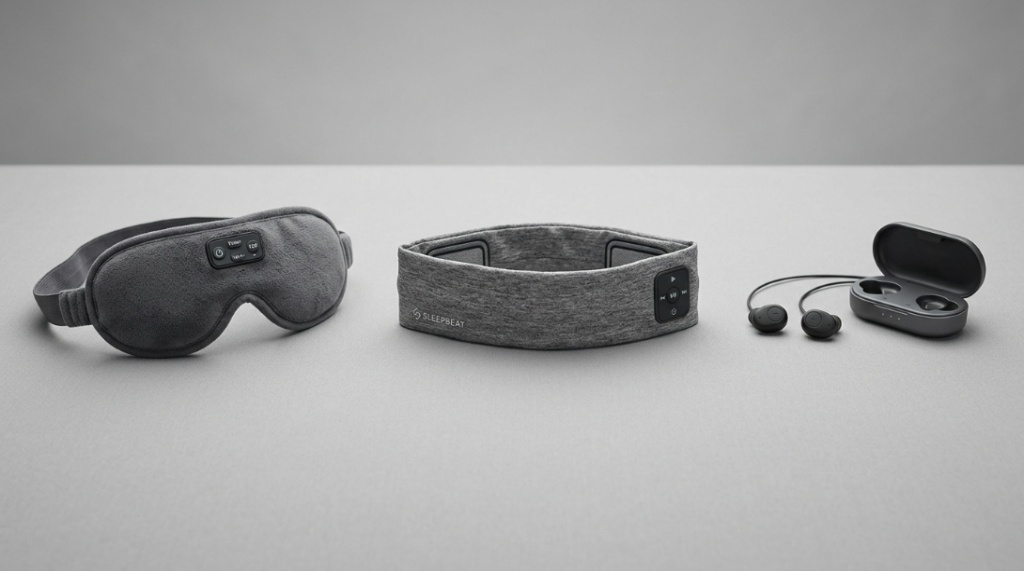
Three categories successfully serve sleep use: sleep headband speakers (fabric band with flat speakers), ultra-thin true wireless sleep earbuds (sub-6mm profile), and bone conduction sleep devices. Over-ear headphones, standard earbuds, and on-ear headphones all fail for sleep regardless of comfort claims.
“Finding the right fit depends heavily on local availability and brand variety. If you are shopping for audio gear in major metropolitan areas, check out our localized resource, Headphones in New York: Complete Beginner’s Guide, to find the best physical storefronts and regional testing centers near you.”
Category comparison for sleep:
- Sleep headband speakers (e.g., SleepPhones, Perytong): Fabric headband containing flat speakers positioned over ears. Most comfortable for side sleepers because fabric compresses against pillow without pressure points. Trade-off: sound quality is adequate but not high-fidelity. Best for white noise, rain sounds, and meditation content. Price: $20–$100.
- Ultra-thin sleep earbuds (e.g., Bose Sleepbuds II, QuietOn 3): Tiny, flat earbuds designed specifically for sleep. Profile under 6mm doesn’t protrude from ear. Excellent noise isolation. Trade-off: most don’t stream your own music — limited to built-in sleep sounds. Expensive: $179–$299.
- Standard true wireless earbuds (small profile): Some compact earbuds (like certain Nothing Ear or Galaxy Buds models) work for back sleepers but still protrude too much for side sleepers. Marginal sleep option only if you sleep exclusively on your back.
- Bone conduction sleep devices: Emerging category — pillow-integrated or under-ear bone conduction avoids ear canal entirely. Still niche with limited proven options.
For detailed reviews of current sleep-specific headphones across all categories, the best headphones for sleeping guide covers models tested through actual overnight use by different sleeper types.
How Do You Test Sleep Headphones Properly Before Deciding?
Test for a minimum of three consecutive nights in your actual sleep environment. Night one reveals obvious comfort issues. Night two tests whether you unconsciously remove them during sleep. Night three confirms they don’t disrupt sleep quality. Single-night testing is insufficient — sleep adaptation takes 2–3 nights.
Three-night testing protocol:
- Night 1 (comfort baseline): Wear while falling asleep in your normal position. Note: how long until you fall asleep (longer than normal = disrupted), any pressure awareness, and whether audio volume/content feels right for drowsiness.
- Night 2 (retention test): Check in the morning: are they still in place? If you found them on the pillow or nightstand, you unconsciously removed them — indicating discomfort you weren’t aware of. This is a deal-breaker for overnight noise masking needs.
- Night 3 (quality confirmation): If nights 1–2 passed, night 3 confirms no cumulative irritation developing. Some products feel acceptable initially but create low-grade irritation that compounds over consecutive nights.
Buy from retailers with 30-day returns specifically because this three-night testing requires real sleep conditions that no store demo or 30-minute home trial can replicate.
What Sound Quality Do You Actually Need for Sleep Audio?
Minimal — sleep audio content (white noise, rain, ocean, meditation voices, ASMR) uses a narrow frequency range that even basic speakers reproduce adequately. Spending extra for “premium sound quality” in sleep headphones provides zero benefit for content you’re not consciously evaluating because you’re unconscious.
Sleep audio requirements vs. music listening:
- White/pink noise: Requires only mid-frequency reproduction. No bass or treble extension needed. Even $20 headband speakers deliver adequate white noise quality.
- Rain/ocean/nature sounds: Slightly broader frequency range but still undemanding. The brain processes these as texture, not music — fine detail is irrelevant during sleep onset.
- Meditation/sleep stories: Voice clarity is the only requirement. Any headphone that handles phone calls handles sleep voice content.
- ASMR: Requires slightly better stereo imaging for the binaural effect. Still far less demanding than music. Budget sleep headphones handle this adequately.
- Music (falling asleep to songs): The one scenario where sound quality matters slightly more. But by the time you’d notice quality limitations, you should be asleep — making it practically irrelevant.
The conclusion: never choose sleep headphones based on audio specifications. Choose based on comfort, profile thickness, and overnight reliability. “Good enough” audio is genuinely good enough when you’re unconscious.
How Important Is Noise Cancellation for Sleep Headphones?
For sleepers needing to block external noise (snoring partners, street noise, noisy neighbors), passive noise isolation from sealed ear tips is more important than active noise cancellation. ANC adds bulk, battery drain, and cost while providing marginal benefit during sleep when the primary noise sources are predictable and continuous.
Noise blocking approaches for sleep:
- Passive isolation (sealed ear tips): Physically blocks 20–30dB of external noise. Requires nothing from battery. Works all night. Combined with sleep audio content, effectively masks most sleep-disrupting sounds. Best approach for most sleepers.
- ANC (active noise cancellation): Adds electronic noise reduction on top of passive isolation. Effective against constant noise (traffic hum, HVAC) but struggles with variable noise (snoring varies in volume). Significant battery drain — may not last full night. Also creates a slight “pressure” feeling some sleepers find uncomfortable.
- Noise masking (playing sound over noise): Rather than blocking noise, covers it with competing pleasant sound. White noise, rain, or fan sounds mask 80% of disruptive noises effectively. Requires only adequate speakers — not noise cancellation technology.
For most sleep applications, the combination of passive isolation + noise masking audio outperforms ANC for overnight use while being simpler, cheaper, and battery-friendlier.
What’s the Ideal Battery Life for Wireless Sleep Headphones?
For fall-asleep-only use (1–2 hours): 6+ hours battery is sufficient — charge every few days. For all-night noise masking (6–8 hours continuous): 10+ hours battery is essential to guarantee overnight coverage without dying at 4 AM. Auto-shutoff timers reduce battery requirements for fall-asleep users.
- Fall-asleep use (most common): Play content for 30–90 minutes while falling asleep, then auto-timer stops. Battery drain: 1–2 hours per night. A 6-hour battery lasts 3–4 nights between charges. Manageable with every-other-day charging.
- All-night masking (noise blocking need): Audio plays continuously 6–8 hours. Battery drain: full charge per night. Need 10+ hour battery for margin. Requires daily charging — choose products with fast charge for morning recovery.
- Weekend/occasional use: Any battery above 4 hours works since you’ll charge between infrequent uses. Battery life is less critical for non-nightly users.
What Features Separate Good Sleep Headphones from Great Ones?
Great sleep headphones include sleep timers (auto-shutoff at set intervals), alarm integration (wake only you without disturbing partner), washable components (headbands that machine-wash), and companion apps with curated sleep content libraries. Good sleep headphones have adequate comfort and sound. Great ones integrate into your complete sleep routine.
- Sleep timer (essential): Auto-stops audio after 15, 30, 60, or 90 minutes. Prevents all-night playback that disrupts deep sleep cycles and wastes battery.
- Gentle alarm (valuable): Wakes only you through the headphones without disturbing a sleeping partner. Some models vibrate gently rather than playing sound.
- Washable design (important for headbands): Headband-style sleep headphones contact your face/hair for 8 hours nightly. Machine-washable fabric prevents hygiene issues from oil and sweat accumulation.
- Sleep tracking integration: Some premium options sync with sleep tracking apps to time audio delivery to sleep stages — playing content during light sleep but not deep sleep.
- Volume limiting: Prevents accidentally high volumes that could damage hearing during unconscious 8-hour exposure. Important safety feature for all-night use.
Conclusion
Avoiding sleep headphone buying mistakes starts with accepting that sleep headphone selection criteria are opposite to daytime headphone criteria: thickness and comfort dominate over sound quality, sleeping position determines which category works, and features like auto-shutoff and battery management matter more than frequency response specifications. Identify your sleeping position first (side/back/combo), determine your use case (fall-asleep-only vs. all-night masking), then choose between headband speakers (best comfort) or ultra-thin earbuds (best isolation) based on your noise-blocking needs. Test for three consecutive nights before committing.
Find overnight-tested wireless sleep headphones matched to your sleeping position at the best headphones for sleeping guide with position-specific comfort ratings and battery endurance data.
What keeps you awake — noise, racing thoughts, or both? And what position do you sleep in? Share in the comments for targeted sleep headphone recommendations matched to your specific nighttime challenge.
Frequently Asked Questions
Can you sleep with regular AirPods or earbuds?
Back sleepers can sometimes use standard AirPods or small earbuds, but side sleepers cannot — the hard housing creates painful pressure against the ear when pressed into a pillow. Even back sleepers often find them dislodged by morning. Purpose-built sleep earbuds with sub-6mm profiles are specifically engineered for what standard earbuds physically cannot provide.
Are sleep headband speakers comfortable for side sleepers?
Yes — sleep headbands are the most comfortable option for side sleepers because the flat speakers (2–3mm thick) are embedded in soft fabric that compresses naturally against a pillow without creating pressure points. The headband acts as a sleep mask and audio device simultaneously. Most side sleepers rate headbands as their preferred sleep audio solution.
How loud should sleep headphones be set?
Set volume at the minimum level where sleep audio masks disruptive sounds — typically 40–50% of maximum. Prolonged exposure during 6–8 hours of sleep at high volumes can damage hearing over time. The goal is gentle masking, not loud playback. If you need high volume to mask noise, the noise isolation of your headphones is insufficient rather than the volume being too low.
Do sleep headphones help with insomnia?
Sleep headphones help with insomnia caused by external noise or racing thoughts by providing masking sounds or guided sleep meditation. They don’t address medical insomnia causes (hormonal, neurological, medication-related). For thought-racing insomnia, sleep stories and guided meditation content through headphones shows clinical benefit in multiple studies.
How often should you replace sleep headphones?
Headband-style sleep headphones last 12–18 months of nightly use before the fabric degrades and speakers shift position. True wireless sleep earbuds last 18–24 months before battery degradation makes overnight coverage unreliable. Plan for annual replacement of headbands and biannual replacement of wireless sleep earbuds.
Can sleep headphones damage your ears overnight?
At appropriate low volumes (under 60%), overnight use doesn’t damage hearing. The risk comes from excessive volume during unconscious use — you can’t regulate volume while asleep. Use headphones with volume limiting features and set maximum volume before sleep. Ear canal irritation from in-ear types is more common than hearing damage — headband styles eliminate this risk entirely.
What’s better for sleep: noise cancellation or noise masking?
Noise masking (playing pleasant sounds over disruptive noise) is more effective and practical for sleep than ANC. ANC creates subtle pressure sensation some find uncomfortable, drains battery faster, and struggles with irregular sounds like snoring. Noise masking with rain/white noise covers most sleep disruptions effectively while requiring only basic speakers and minimal battery power.




Leave a Reply